They Were Called Crazy. History Called Them Legends. — Famous Psychic Gifts Through History

Written by Kim Lessage — clairvoyant, medium, and medium instructor since 2006. Kim has helped hundreds of students understand and develop their psychic gifts, from beginners to advanced practitioners.
She is the author of Shadow Becoming Light, available on Amazon.
Joan of Arc
1412 – 1431
Clairaudience + Clairvoyance
Called a divine messenger when France needed her. Called a witch when she was no longer useful. Burned at 19. Declared a Saint 500 years later.
History has a complicated relationship with gifted people.
When a gift is useful — when it wins a war, produces a symphony, or helps someone rise to power — it gets called divine. Miraculous. A blessing from God.
When it is no longer useful — or when it belongs to someone with no power, no status, no army behind them — it gets called madness. Heresy. Something to be burned at the stake.
The gift doesn't change. The political context does.
Here are six people whose spiritual gifts went down in history. Some were celebrated. Some were executed. All of them were real.

Joan of Arc — The Girl Who Heard Saints and Led an Army
She was 13 years old when it started. A peasant girl from Domrémy, France, who began hearing voices and seeing visions — Saint Michael the Archangel, Saint Margaret, Saint Catherine. Each vision was accompanied by a flash of light.
Her village thought she was strange. The church was skeptical. And then France ran out of options.
The country was losing the Hundred Years' War. The English had been laying siege to Orléans for seven months. The French army had almost no morale left. And somehow — a 17-year-old peasant girl with no military training and a direct line to the saints became their best option.
Crown Prince Charles VII disguised himself to test her. The moment she walked in, she identified him. She told him his legitimacy was divinely sanctioned. He gave her an army.
She led the French army — not as a general, but as something more powerful: a symbol. A living proof that God was on their side. And in 9 days, she broke a siege that had lasted 7 months.
Then came the fall. After Charles VII was crowned — exactly as Joan had predicted — her usefulness to the crown began to fade. She was captured by Burgundian allies of the English in May 1430 and sold for 10,000 pounds.
Her trial lasted four months. She was accused of heresy, witchcraft, and cross-dressing. The judge was a political appointee of the English alliance. The goal was simple: prove that her voices came from the devil, not from God.
She never broke. She answered every question without a lawyer. She never recanted.
She was burned at the stake on May 30, 1431. She was 19 years old.
In 1456 — 25 years later — a retrial found her innocent. In 1920 she was canonized as a Saint by the Roman Catholic Church. The same institution that burned her.
Joan of Arc was a saint, a witch, a hero, and a lunatic — depending entirely on who needed her to be what, and when. Her gift never changed. The politics did.
Ludwig van Beethoven
1770 – 1827
Clairaudience — Absolute Pitch
Famous enough that his gift was called genius. Never called madness — despite composing his greatest work in total silence.
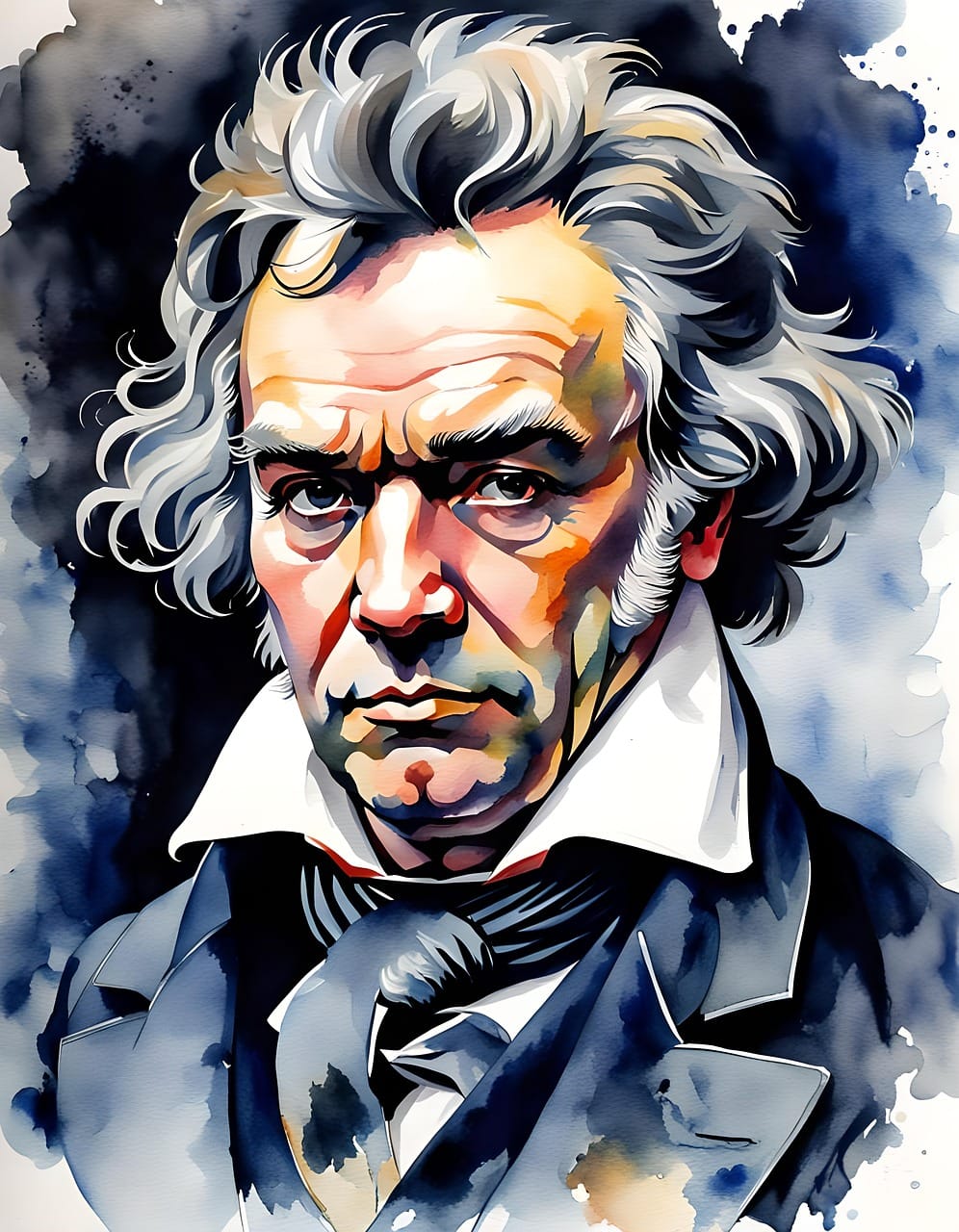
Around 10Ludwig van Beethoven — He Heard Music Nobody Else Could Hear
Beethoven's childhood was brutal. His father Johann — an alcoholic court singer — forced him to practice piano from the age of four. Late nights. Beatings when the practice wasn't long enough. A childhood designed to produce a prodigy, not a person.
It worked. By 11 he was published. By 22 he was making a name across Europe.
Then, around 28, he started losing his hearing. He hid it for years — terrified it would destroy his career. By 32 he was in a suicidal state, documented in what became known as the Heiligenstadt Testament.
He didn't stop. He redefined his entire musical style. He composed his Third Symphony — the Eroica — while going deaf. He lost his hearing completely at 45.
And then he composed the Ninth Symphony. The most celebrated piece of classical music in history. In total silence.
He heard the music in his head. Not as memory — as active perception. What Beethoven had is called absolute pitch. The ability to hear music internally with perfect clarity, independent of the physical ear. In the language of spiritual gifts, that is clairaudience.
Because he was famous — because he was a white European man of recognized genius — nobody called it madness. They called it extraordinary. They called it divine.
Same gift. Different status. Different verdict.
Victor Hugo
1802 – 1885
Clairaudience — Spiritual voices
His mysticism was called artistic vision. His Ouija sessions with Shakespeare were considered poetic inspiration. Fame protects the gifted.
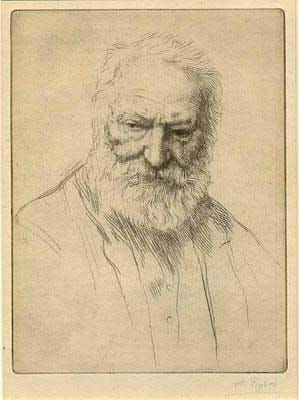
Victor Hugo — The Man Who Talked to Shakespeare Through a Ouija Board
Victor Hugo is best known for Les Misérables and The Hunchback of Notre Dame. What is less known is that he spent years communicating — or believing he communicated — with the dead.
His poetry had always carried a paranormal edge. 'The Two Voices' in 1831. 'Inner Voices' in 1837. He described hearing spiritual voices long before his daughter died.
When Leopoldine drowned in 1843, something cracked open in him. Grief activated what had always been there. He threw himself into spiritism — attending séances, using Ouija boards — and documented conversations he believed he had with Shakespeare, Voltaire, and others.
He was in exile in Jersey Island from 1852 to 1855 when he met a spiritism group that transformed his worldview. His most mystical works came from this period.
Victor Hugo was famous, politically connected, and intellectually respected. So when he said he heard the voice of Shakespeare through a table-turning session, the world called it artistic eccentricity. Had he been an unknown woman in a village, they would have called it something else entirely.
Mahatma Gandhi
1869 – 1948
Claircognizance — Inner voice
He called it the voice of God. It guided his most important political decisions. Nobody questioned it because it worked.

Mahatma Gandhi — He Made Political Decisions Based on a Voice
Gandhi described hearing what he called an inner voice — a voice more real than his own existence. It came to him most clearly after periods of deep struggle, often in dreams.
He did not hide it. He referenced it openly in his writings and speeches. He made major political decisions — including hunger strikes that shaped Indian independence — based on what this voice told him.
Nobody called him schizophrenic. Nobody medicated him. Nobody questioned his sanity.
Because the voice guided him toward outcomes the world recognised as moral and political genius.
When a gifted person's perception produces outcomes the world approves of, the gift gets called wisdom, intuition, or divine guidance. When it produces outcomes the world fears or cannot control, it gets called madness. Gandhi's inner voice was clairaudience. The world just didn't have that word for it.
Carl Gustav Jung
1875 – 1961
Clairvoyance + Clairaudience
He studied his own visions scientifically and called them active imagination. He built an entire psychological framework from his gift.
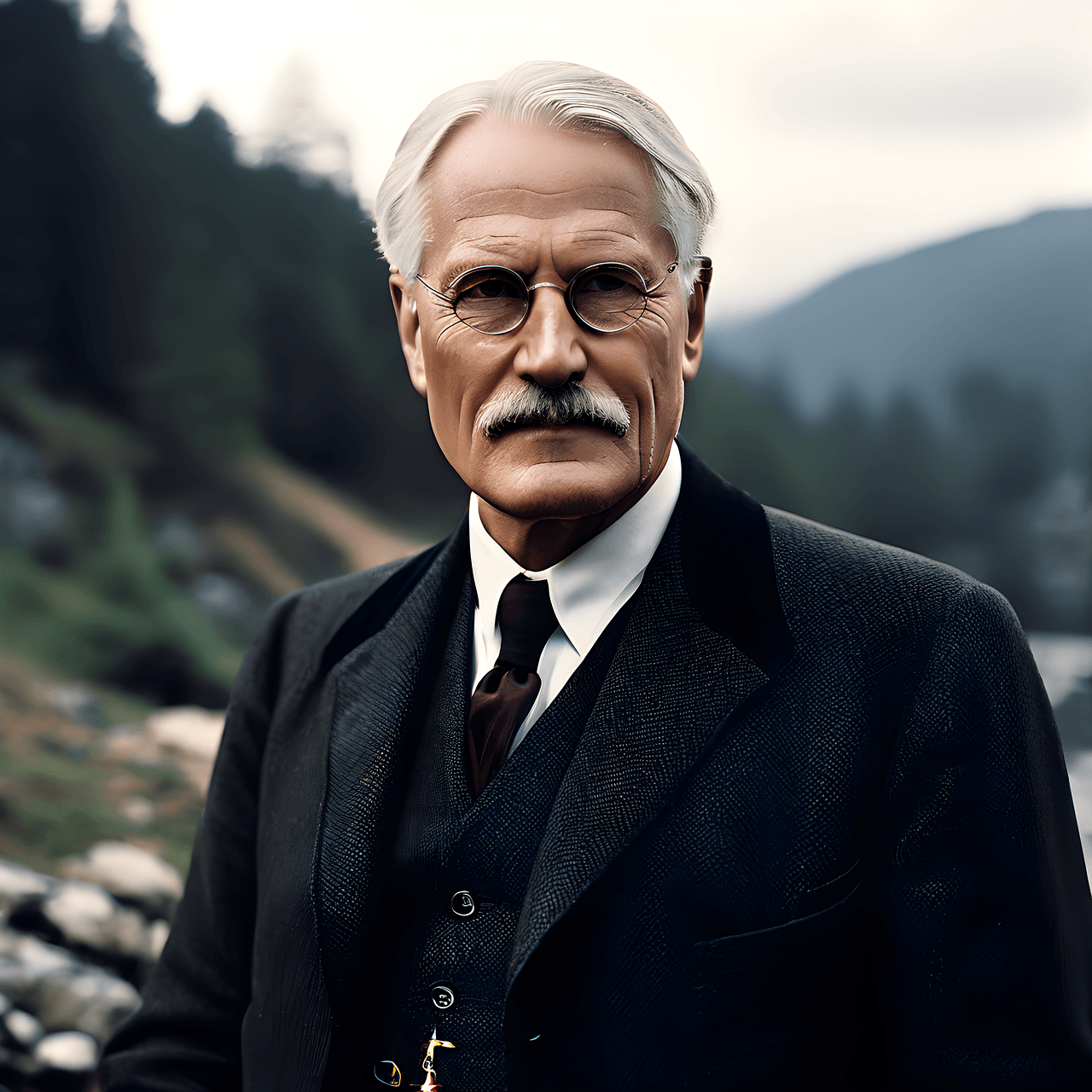
Carl Jung — The Psychiatrist Who Documented His Own Visions
Carl Jung was one of the founders of modern psychology. He was also a man who heard voices and had visions — and who, instead of suppressing them, studied them obsessively.
He documented everything in The Red Book — a private record of his visions, conversations with inner figures, and experiences that he described as confrontations with the unconscious. He called the practice 'active imagination.'
What Jung called active imagination was a structured method of engaging with perceptual experiences — voices, visions, presences — in a deliberate and analytical way. He did not pathologize his experiences. He built a career studying them.
His framework of the collective unconscious, archetypes, and synchronicity — ideas that changed the entire field of psychology — grew directly from his own perceptual gifts.
Jung is perhaps the most interesting case of all. He was a gifted person who had the intellectual framework and the professional status to turn his gift into a body of work. He didn't have to hide it. He had the language, the platform, and the credentials to call it science.
Anthony Hopkins
1937 – present
Clairaudience
Heard a voice that told him to stop drinking in 1975. He listened. He never drank again. He calls it a spiritual experience.
Anthony Hopkins — The Voice That Saved His Life
Anthony Hopkins struggled with alcohol for years. In 1975, at what he describes as his lowest point, he heard a voice.
He has described it as a presence — something that asked him simply: do you want to live or die? He chose to live. He stopped drinking that day and never went back.
He speaks about this experience openly. He calls it a spiritual encounter. He credits it with saving his life and his career.
Nobody questions Anthony Hopkins' sanity. He is one of the most celebrated actors in the world. His account of hearing a voice is treated as a profound personal story — not a symptom.
The Pattern Is Always the Same
Look at all six of these people. What do they have in common?
They all had perceptual experiences — voices, visions, knowings — that went beyond what most people experience. And in every case, how that experience was received by the world depended on one thing: how useful it was to the people around them.
Joan of Arc was a saint when France needed her and a witch when they were done with her. Beethoven was a genius because his deafness produced beauty. Hugo was an eccentric poet because his fame protected him. Gandhi was a spiritual leader because his voice guided him toward outcomes the world respected. Jung was a scientist because he had the credentials to frame his visions academically. Hopkins was a survivor because his story ends in sobriety and success.
In every single case — the gift was the same. What changed was the context, the politics, the status, and the usefulness of the person carrying it. Your gift is not defined by what the world has decided to call it. It is defined by what it actually is.
What This Means for You
If you have a spiritual gift — if you hear things, see things, feel things, know things — you are not the first. You are not alone. And you are not crazy.
You are standing in a line that includes a teenage girl who led an army, a deaf composer who heard symphonies in silence, a novelist who talked to Shakespeare, a lawyer who built a nation on an inner voice, and a psychiatrist who turned his visions into a revolution in psychology.
The world has always had gifted people. It has just never been consistent about what to call them.
The difference now is that you have access to a framework — a real, structured understanding of what you are experiencing and what to do with it. You don't have to wait for history to decide whether you were a saint or a witch. You can understand your gift right now.
That's what this blog is for. And if you're ready to go deeper — browse the other articles here or visit kimlessage.com.